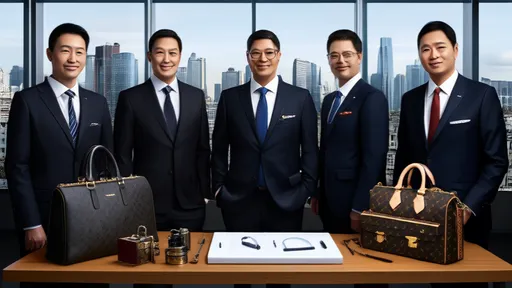
In the hushed grandeur of Parisian ateliers, where leather scraps whisper across cutting tables like autumn leaves, the Louis Vuitton trunk undergoes its silent metamorphosis. What began in 1854 as a practical solution for aristocrats transporting gowns between châteaux has become something far more potent - a floating stage where contemporary narratives of mobility, identity, and aspiration unfold. The trunk no longer merely carries possessions; it carries metaphors.
The runway show that ignited conversations last season featured a towering stack of LV trunks rotating slowly like a mobile Calder sculpture. Models emerged from their compartments not as passive mannequins, but as characters in some globalized Odyssey - a businesswoman adjusting her blazer beside a punk poet scribbling in a Moleskine, a digital nomad untangling headphones beside a septuagenarian heiress. Here, the luggage became both proscenium arch and protagonist, its very presence interrogating what it means to be "en voyage" in an era when physical movement and social mobility have become fraught with new meanings.
Beneath the spectacle lies an ingenious subversion. Traditional luxury marketing would have us believe travel is about seamless transitions - first-class lounges and frictionless check-ins. Yet creative director Nicolas Ghesquière's vision reveals the messy reality of 21st-century movement. The scuffs on leather corners, the mismatched stickers from obscure border crossings, the way a trunk's interior compartments hold the ghostly imprints of hastily repacked belongings - these become badges of honor rather than flaws to be polished away. In an age of algorithmic travel recommendations and homogenized hospitality, the LV trunk asserts the radical notion that true journeying requires leaving marks upon the vessel as surely as the vessel leaves marks upon us.
Contemporary artists have taken up this symbolism with particular verve. Ai Weiwei's 2007 installation "Circle of Animals/Zodiac Heads" featured twelve bronze zodiac sculptures housed in LV monogrammed trunks - a wry commentary on cultural displacement and the commodification of heritage. More recently, designer Virgil Abloh's "Coming of Age" exhibition reimagined the trunk as a canvas for graffiti, its surfaces bearing the layered patina of urban transience. These interventions expose the trunk's secret power: its ability to serve as both sanctuary and billboard, a private realm that nonetheless broadcasts its owner's trajectory to the world.
The psychological dimensions prove equally fascinating. Psychoanalysts might interpret the trunk's multiple locks and compartments as manifestations of travel anxiety - the need to control one's environment while surrendering to unpredictable currents. Sociologists note how the democratization of luxury goods has transformed the trunk from a marker of aristocratic Grand Tours to an aspirational object for digital creators whose "offices" exist in airport lounges from Dubai to LAX. The very materials whisper contradictions: vegetable-tanned leather that softens with age versus carbon fiber reinforcements guaranteeing structural rigidity - much like the modern traveler balancing vulnerability and armor.
Perhaps most strikingly, these objects have become mirrors of geopolitical shifts. The 2023 limited-edition "Nomad" collection featured trunks with dual-voltage compartments and removable privacy screens - subtle acknowledgments of today's hybrid work realities. Another piece incorporated blockchain-trackable authenticity chips alongside hand-stitched handles, embodying the tension between heritage and hyper-modernity. Like the ambiguous smile of the Mona Lisa, the LV trunk's meaning shifts depending on the angle of regard: Is it a relic of Eurocentric luxury or a canvas for global hybridity? A status symbol or a tool for survival in an unstable world?
Backstage at the Spring/Summer 2024 show, makeup artists dabbed faux jetlag shadows beneath models' eyes while stylists artfully wrinkled trench coats. The attention to such details reveals the central paradox: We've reached a point where the performance of travel has become as culturally significant as the act itself. The LV trunk, in this context, functions like a contemporary version of the medieval reliquary - no longer transporting saints' bones, but the sacred artifacts of our mobile identities: a well-thumbed passport, a charger tangled with foreign adapters, that one perfect lipstick that works from boardroom to bar.
As climate concerns render indiscriminate globetrotting increasingly contentious, the trunk's symbolism grows more complex. Recent advertising campaigns emphasize "slow luxury" - trunks carried aboard trains rather than private jets, accompanied by taglines about mindful consumption. This recalibration suggests luxury's next frontier isn't about how far or frequently one travels, but about possessing the discernment to move through the world with intentionality. The trunk becomes a vessel not for escape, but for presence.
When a Bespoke order leaves the Asnières workshop today, its journey has only begun. Unlike mass-produced suitcases destined for baggage carousels, these trunks accumulate meaning through use. The first scratch from a cobblestone street in Lisbon, the patina from monsoon humidity in Mumbai, the lingering scent of a Havana cigar shop - these become the real luxury, far beyond the gleam of brass corners. In the end, the Louis Vuitton trunk stage presents us with a provocative question: In our age of digital nomadism and fractured identities, aren't we all just trying to figure out what to pack for the journey - and what to leave behind?
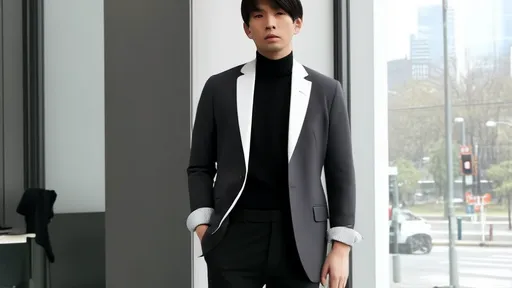
The art of layering has long been a cornerstone of sophisticated dressing, and few combinations embody this principle as elegantly as the high-neck sweater, shirt, and suit jacket trifecta. This timeless trio, often referred to as the "three-piece layering formula," transcends seasonal trends while offering unparalleled versatility for both professional and social settings. What begins as a practical solution for transitional weather evolves into a masterclass in texture play and tonal harmony when executed with intention.
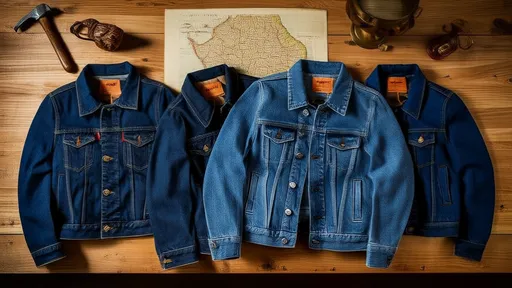
The denim jacket stands as one of fashion's most enduring silhouettes, a sartorial artifact that has weathered half a century of cultural shifts while maintaining its fundamental DNA. Like archaeological strata revealing civilizations through layers of sediment, the evolution of the classic denim jacket tells a story about changing attitudes toward workwear, rebellion, and ultimately, timeless style.
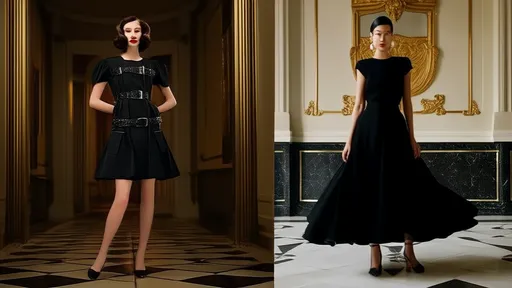
The fashion pendulum has swung to its extremes this season, with designers and style enthusiasts alike embracing the dramatic dichotomy between micro-mini and floor-grazing hemlines. This sartorial standoff between barely-there and sweeping silhouettes has ignited conversations about femininity, power dressing, and the cultural moment we're living through.
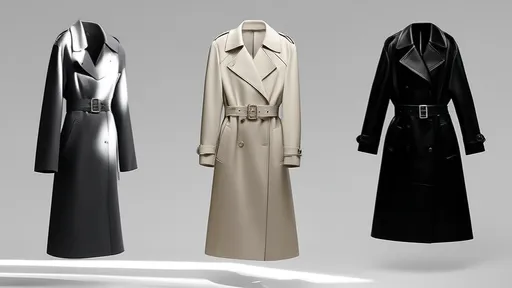
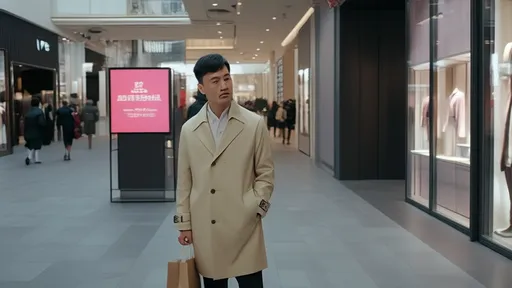
The fashion world is no stranger to reinvention, but the latest revolution in trench coat materials is rewriting the rules of outerwear. Gone are the days when gabardine cotton reigned supreme—today’s most daring designers are embracing unexpected fabrics like cashmere, silk, and even leather to redefine the classic trench. This isn’t just a stylistic shift; it’s a material rebellion that challenges the very essence of what a trench coat can be.
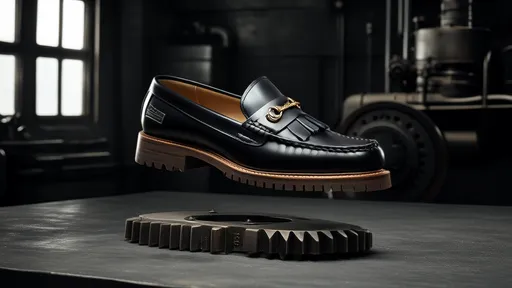
The loafer, that timeless slip-on shoe, has undergone more transformations than a Hollywood starlet. From its humble beginnings as a practical footwear choice to its current status as a fashion chameleon, the loafer has embraced trends with surprising adaptability. The latest chapter in its evolution sees the return of three distinct design elements: fringe, metal accents, and chunky soles. This isn't their first appearance on the loafer stage, and if fashion history teaches us anything, it won't be their last.
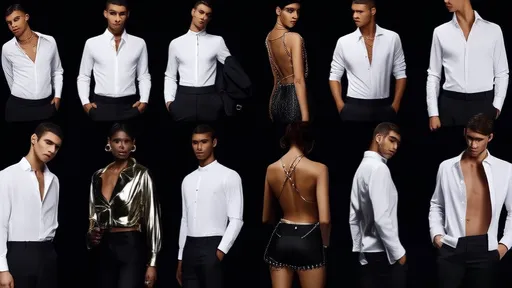
The humble white shirt has long been considered a wardrobe staple, but its versatility extends far beyond the boardroom. This timeless piece can seamlessly transition from professional settings to evening revelry with just a few strategic styling choices. The key lies in understanding how fabric, cut, and accessories can completely transform its character.
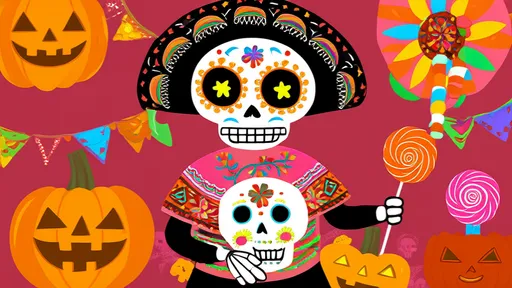
The vibrant celebration of Día de los Muertos (Day of the Dead) has long been a source of artistic inspiration, and its iconic imagery is now finding a playful new canvas: children’s fashion. The fusion of traditional Mexican folklore with contemporary kidswear has given rise to a delightful trend—whimsical interpretations of calaveras (skulls), marigolds, and other symbolic elements that capture the essence of the holiday while radiating childlike charm.
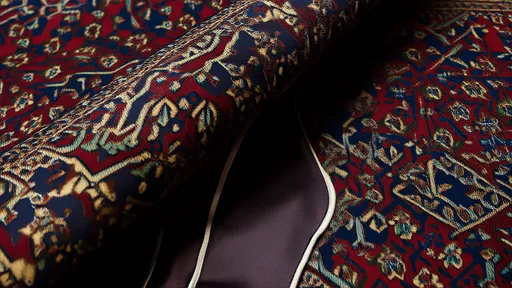
The intersection of traditional craftsmanship and contemporary fashion has always been a fertile ground for innovation. One of the most intriguing developments in recent years is the deconstruction of Persian carpet motifs for use in the lining of bespoke suits. This fusion of Eastern artistry and Western tailoring is not merely a stylistic choice but a narrative woven into the very fabric of modern menswear.
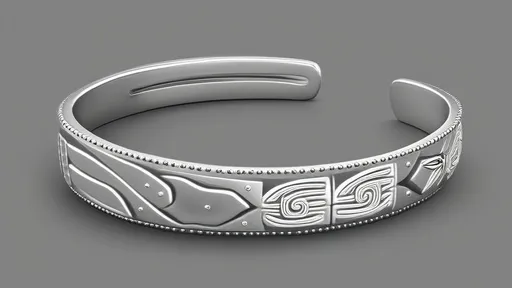
The intricate silver ornaments of the Miao people have long been celebrated for their craftsmanship and cultural significance. For centuries, these pieces have served not only as adornments but also as carriers of identity, history, and spiritual beliefs. In contemporary jewelry design, however, there is a growing movement to reinterpret these traditional elements through a minimalist lens. This shift, often referred to as "subtractive transformation," seeks to distill the essence of Miao silverwork into forms that resonate with modern aesthetics while honoring their roots.
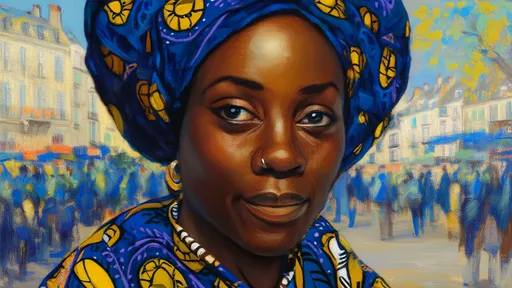
The vibrant hues of African wax prints and the luminous palette of European Impressionism might seem worlds apart at first glance. Yet, when placed in dialogue, these two distinct artistic traditions reveal a fascinating conversation about color, culture, and perception. Both traditions, though rooted in different continents and histories, share an unapologetic celebration of color as a language unto itself—one that transcends borders and speaks directly to the soul.
The fusion of Eastern and Western fashion has always been a fascinating subject, and one of the most intriguing cross-cultural adaptations is the incorporation of the Japanese obi—a wide, structured sash traditionally worn with kimono—into Western formalwear. This stylistic marriage is not merely about borrowing a decorative element; it represents a deeper dialogue between two distinct sartorial philosophies. The obi's rigid architecture and bold proportions have inspired designers to reimagine the silhouette of evening gowns, tuxedos, and even bridal wear, creating garments that defy conventional tailoring while honoring the heritage of both traditions.
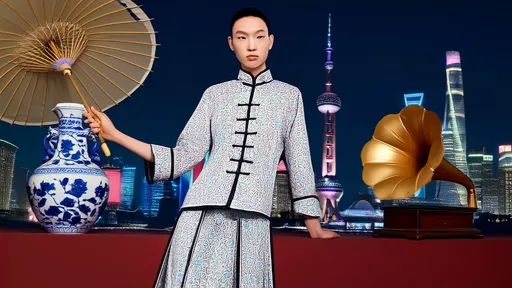
The Shanghai Fashion Week has long been a crucible of creativity, where China's most daring designers converge to redefine contemporary aesthetics. This season's standout collections didn't merely follow global trends—they dissected cultural DNA with surgical precision, stitching together fragments of heritage and futurism into wearable manifestos. What emerged wasn't just fashion, but a series of visual thesis statements about Chinese identity in flux.
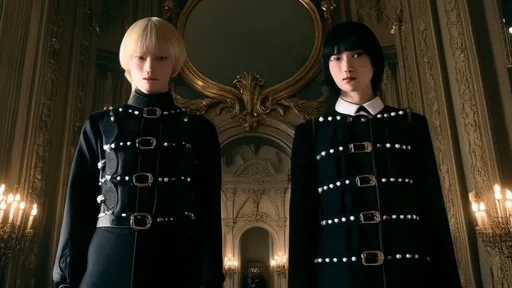
In the realm of high fashion, where visual storytelling reigns supreme, Gucci has once again pushed the boundaries of creative expression with its latest campaign featuring twin models. This audacious move isn’t merely about doubling the beauty on display—it’s a deliberate exploration of symmetry as a theatrical device, a visual language that speaks to our subconscious fascination with mirrored perfection. The Italian luxury house has transformed the runway into a stage where doppelgängers perform an intricate dance of duality, challenging our perceptions of identity and aesthetics.
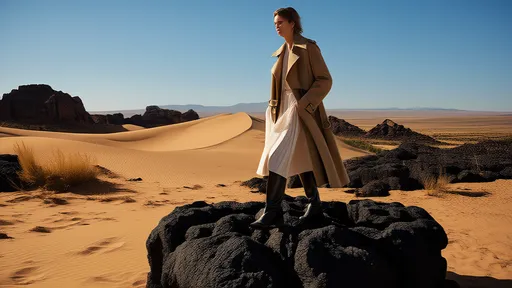
The vast, ochre-hued dunes of the Sahara served as an improbable yet poetic canvas for Saint Laurent’s latest spectacle—a desert mirage where fashion’s most austere aesthetics collided with nature’s untamed grandeur. Anthony Vaccarello’s decision to stage the Fall 2023 menswear show in the Merzouga desert wasn’t merely a logistical flex; it was a philosophical provocation. Here, where the horizon dissolves into heat waves and the silence hums with infinity, the brand’s signature minimalism underwent a metamorphosis. The barren landscape, far from diminishing the collection’s impact, became its most potent collaborator.
In the hushed grandeur of Parisian ateliers, where leather scraps whisper across cutting tables like autumn leaves, the Louis Vuitton trunk undergoes its silent metamorphosis. What began in 1854 as a practical solution for aristocrats transporting gowns between châteaux has become something far more potent - a floating stage where contemporary narratives of mobility, identity, and aspiration unfold. The trunk no longer merely carries possessions; it carries metaphors.
The recent Dior runway show once again proved that fashion is not merely about clothing—it’s an immersive experience where every element, from fabric to floral arrangements, communicates a deeper narrative. The centerpiece of this season’s spectacle was an extravagant floral wall, a living, breathing installation that transcended mere decoration. Its presence was so commanding that it became a co-star alongside the models, whispering secrets about nature, femininity, and the brand’s heritage through petals and stems.
The wedding industry has long been synonymous with extravagance and excess, but a quiet revolution is taking place as sustainability becomes a priority for modern couples. At the heart of this shift is the rise of reusable wedding dress designs—a movement that challenges the tradition of wearing a gown only once. Designers and brides alike are rethinking the lifecycle of these cherished garments, transforming them from single-use relics into versatile pieces meant for years of wear.
The global luxury resale market has undergone a seismic shift in recent years, fueled by changing consumer attitudes toward sustainability and the democratization of high-end fashion. At the heart of this transformation lies the critical issue of trust – how to authenticate pre-owned luxury goods across borders in a market where counterfeits have historically thrived. The standardization of authentication protocols is emerging as the linchpin that could unlock the industry's full potential.
The Z Generation's wardrobe is a fascinating study in contrasts—a carefully curated mix of high-rotation staples and unworn relics of impulsive purchases. Unlike previous generations, Gen Z approaches fashion with a unique blend of pragmatism and passion, resulting in a closet that’s equal parts utilitarian and expressive. Recent reports delving into their buying habits reveal surprising patterns, highlighting the items they can’t live without and the regrettable purchases gathering dust.
The global economic landscape has shifted dramatically in recent years, with middle-class consumers tightening their belts amid inflationary pressures and economic uncertainty. This phenomenon of "consumption downgrading" presents both challenges and opportunities for affordable luxury brands that once thrived on aspirational shopping. The once-reliable playbook of premium pricing and conspicuous branding now requires careful rethinking as value-conscious shoppers scrutinize every purchase.